Contact Info
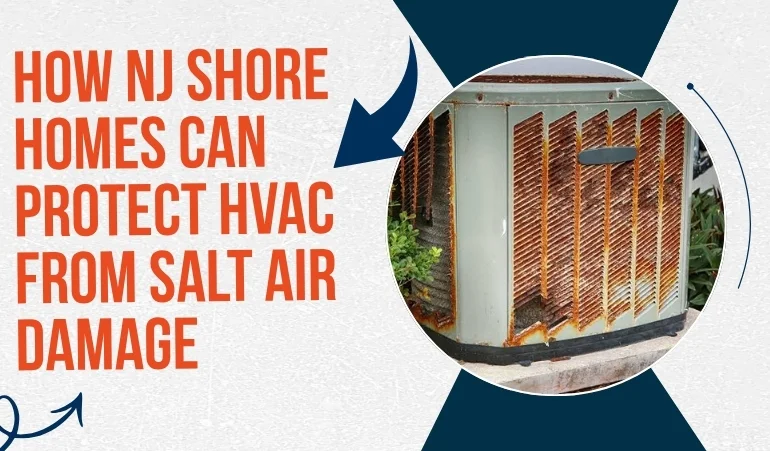
Living near New Jersey shores comes with both luxury and convenience. You enjoy pristine sand beaches, access to fresh seafood, and relaxing boardwalks. The aesthetic view and natural beauty are beyond this. This is the positive picture of New Jersey's shores. There is also a downside regarding your HVAC system. New Jersey accompanies salt air, which is not a friend of your HVAC. It causes corrosion, leads to faster wear and tear, and ultimately brings your HVAC closer to what we call "complete failure."
Just because salty air hits your HVAC badly is not a reason to relocate from coastal areas. The good news is that you can protect your home’s HVAC with slight modifications and care. And Lehigh HVAC is here to prepare you on how you can ensure your HVAC stays safe in these areas. Let’s uncover those useful tips one by one.
Salty air, high humidity, and long seasonal shutdowns all contribute to creating trouble for your HVAC system. These conditions are not usually encountered by the standard HVAC systems installed in inland regions. A standard installation, components, and maintenance schedule that works great in Bridgewater or Plainfield might not be sufficient to keep the unit at optimal performance in tidal areas such as Edison or New Brunswick. This is why homes near NJ shores need special HVAC care.
Here is a brief glimpse of those challenges.
Salt is not just harmful for your construction or outside deck. It has an equal negative effect on your outdoor HVAC unit. It sits on the unit, causes corrosion, and damages condenser coils.
Salty air is not the only player in HVAC damage. The humidity also puts its 100% in keeping your HVAC under pressure and maintaining the air quality to the worst. It also contributes to the promotion of mold and mildew growth, which is responsible for spreading foul odors inside your living space.
Though it is not continuous, storms leave a drastic effect on HVAC health. In many areas, the level of water after a flood is too high to come in direct contact with the HVAC unit. The rain and windstorms are also there to cause mechanical damage to the outdoor unit and its expensive components.
Where there is a problem, there is a solution. Team Lehigh HVAC suggests the following tips as part of the plan to protect your HVAC in NJ shore homes:
Ask your local technicians to add a protective shield around your outdoor HVAC unit and condenser coils. This shield makes a barrier between the metal and the salty air and prevents damage in the form of corrosion. Salt shield coatings with chemical barriers are usually the ideal shields to be used in these cases.
Rinse your outdoor unit completely with a garden hose. This rinsing wipes out all the dirt, dust, and buildup of the salt air from the unit. Regular cleaning ensures these deteriorating agents don’t find sufficient time to cause severe damage to HVAC components. Depending on the situation, you can use some equipment-friendly cleaning agents as well to eliminate even the most persistent or stubborn stains.
If your current HVAC has done its job and you are ready for a replacement, switching to a coastal-rated model could be the best choice. This equipment is designed with cutting-edge technology and ensures there is no harm caused by those blunt winds. The remaining is the humidity; you can control your humidity with your HVAC or install a whole-house humidifier to keep it in the normal range.
If your property allows and code-compliance rules are met, place your HVAC unit on the leeward side. Doing so ensures it is protected from the direct effect of the coastal air, which is a big problem for HVAC corrosion and premature wear and tear. Furthermore, try to place the HVAC a bit higher than the ground level so it stays protected from the flood and accumulated rainwater.
Lehigh HVAC is adept at keeping HVAC systems in their top condition, whether it is in central New Jersey, coastal lines, or somewhere else in this state. Contact us, share your concerns, and let our team maintain your HVAC in top condition. Get in touch with us at 848-361-4707.