Contact Info
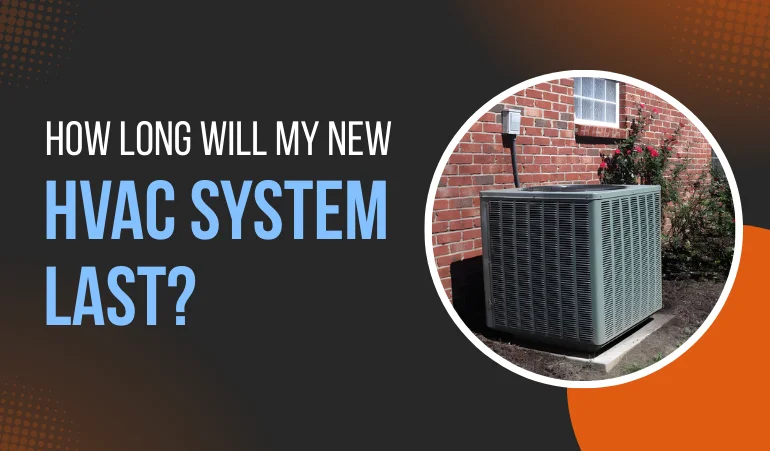
Most of the modern HVAC systems are durable and efficient. They can last as long as 20 to 25 years or even longer in some cases. But the fact is that nothing lasts forever. At the end, you have to replace your system with a new one. Having a precise idea of the expected lifespan can help you make a smart choice regarding your investment.
In this blog post, we will explore the expected lifespans of different HVAC systems in Pennsylvania and New Jersey.
The longevity of an HVAC system is presented in two distinct metrics.
Median Service Life (MSL): It is the actual, statistical midpoint where half of the systems were replaced due to failure or inefficient performance. This data is usually collected and presented by organizations such as the American Society of Heating, Refrigerating, and Air-Conditioning Engineers (ASHRAE) and the Department of Energy (DOE).
Effective Useful Life (EUL): It is the hypothetical, expected lifespan of the system if it continued to work under normal maintenance. These values are issued by organizations such as the Pennsylvania Public Utility Commission (PA PUC) and the New Jersey Board of Public Utilities (NJ BPU) to dictate the eligibility for rebates and incentives.
Expected Lifespan by Setting
|
System Type |
Median Service Life (Years) |
Effective Useful Life (Years) |
Regional Expected Range (PA/NJ) |
|
Gas Furnace |
18 |
18 |
15–22 |
|
Central Air Conditioner |
15 |
15 |
8–17 |
|
Air-Source Heat Pump |
15 |
14 |
10–15 |
|
Residential Boiler |
24 |
25 |
15–35 |
|
Commercial Chiller (Water-Cooled) |
23 |
20 |
20–30 |
|
Commercial Chiller (Air-Cooled) |
20 |
15 |
15–20 |
|
Packaged Rooftop Unit (RTU) |
15 |
15 |
12–18 |
|
Ductless Mini-Split |
15 |
15 |
12–20 |
The efficiency of an HVAC system is highly linked to maintenance. Stats show that the systems under regular and professional maintenance outperform those with neglected maintenance. Additionally, maintenance enhances the age of the system manifold.
Maintenance is especially essential for commercial settings. As commercial HVAC systems have to work harder to meet the increasing demands of the facility, they need detailed maintenance. The frequency of the maintenance is also higher for commercial settings.
Maintenance Impact on Commercial HVAC Lifespan
|
Maintenance Level |
Commercial Survival (Years) |
Impact on Lifespan |
|
No Maintenance |
10–12 |
Early failure due to component strain |
|
Basic Maintenance |
15–18 |
Survival near the industry median |
|
Proactive Maintenance |
18–20 |
Median life enhanced by 15-20% |
|
Premium Maintenance |
20–25 |
Around the upper limit of ideal life |
|
Specialized Maintenance |
25+ |
The system exceeds the industry standards |
From the above table, we are now clear that the negligence in the maintenance reduces HVAC lifespan by many years. Maintenance is not alone in this list. Here are some other factors that lead to premature failure of an HVAC system.
Improper Sizing: An undersized system struggles to meet the comfort demands. An oversized unit, on the other hand, causes component damage due to rapid cycling.
Inaccurate Installation: The mistakes during the installation process compromise the system’s performance. Increased wear and tear, frequent repairs, and the result is HVAC failure.
Electrical Problems: Issues in insulation, wiring, capacitors, and contractors have a direct effect on HVAC performance and efficiency.
Environmental Factors: High humidity, extreme temperature fluctuations, coastal salt air, and airborne debris put an extra strain on the system.
We wish you all the best for your new HVAC system. Hope so; it will work for 30+ years. But you have to keep a close eye on its performance. Fortunately, a system shows several warning signs before it fails. Whenever you notice any of those signs, contact your local HVAC pros immediately. Based on the system’s age and performance, choose one from HVAC repairs or a new installation.
Unexplained Increase in Bills: If you can’t figure out the reason for skyrocketing energy bills, your system might have done its job. Get it inspected and replace it if needed.
Reduced Performance: If your system can’t just deliver the comfort it used to deliver, it means it’s done. Now you have to install a new system.
Frequent Repairs: If you have to book residential or commercial HVAC service more often, you might need a new system.
Health and Safety Risks: If your system is exposed to serious health or safety hazards, it is better to get it replaced. Consider adding smart safety features with the new one.
This is the most repeated question we encounter at Lehigh HVAC. We have a very clear and practical answer to this concern. Look at your system regularly and fulfill its demands. For example, schedule regular maintenance from a professional company. Carry out DIY cleaning and inspection tasks. Whenever an issue arises, fix it immediately.
Adding modern, innovative solutions is a smart approach to prolonging lifespan. You may consider adding programmable thermostats, surge protectors, HEPA filters, etc., for this purpose.
The expected lifespan of HVAC systems varies greatly. It depends on several factors, including maintenance, sizing, tune-ups, and environmental factors. Systems with specialized maintenance carried out on time can last as long as 30+ years. The lifespan also varies with settings. The commercial systems generally have a high demand and tend to have a shorter life unless they are compensated regularly. In short, if you keep your system in good condition, you can benefit from it for longer periods.
Feel free to contact us at 484-961-7044 if you want to discuss something related to your HVAC system or book an HVAC service.