Contact Info
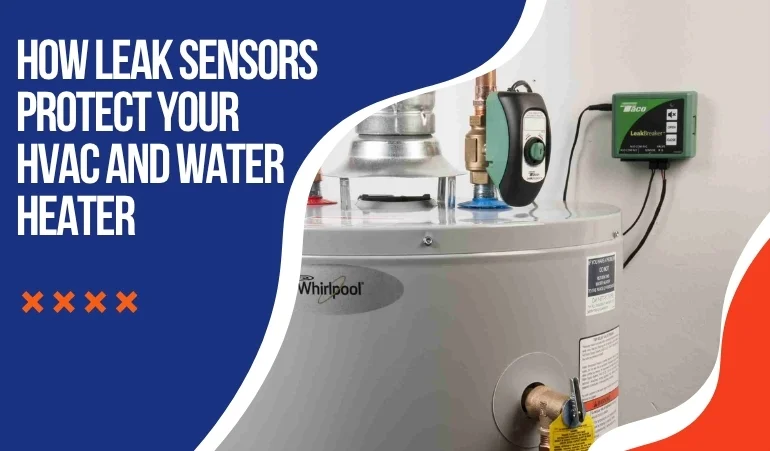
HVAC water leakage is never the same as plumbing leakage. In plumbing, a burst pipe announces itself louder. But in HVAC, it usually starts with a few drops that are often left neglected. But these few drops, if not handled with expert care, can create massive damage. They can cause corrosion in some expensive components, promote mold and mildew growth, and spread foul odors in the space. The actual scenario is not limited to this; it can have effects far beyond.
To prevent this accidental moisture damage, leak sensors are a great solution. They warn HVAC owners immediately. Property managers can then act fast and prevent major breakdowns. In this blog, we will discuss how leak sensors protect HVAC systems and water heaters from major damage. We will also uncover the best placement options for these sensors.
Water leak sensors are small electronic devices that detect water leakage. After detecting even a few drops, they immediately trigger an alarm that sends a warning notification to the attached mobile app and an alert on the HVAC itself so the system owners can take immediate remedial steps.
Three common types of water leak sensors are
Spot Sensors
Small, battery-powered devices placed directly on the floor in high-risk spots.
Sensing Cables
Flexible wire ropes designed to wrap around pipes along a basement or room floor.
Smart In-Line Systems
Units attached directly to your main water line that monitor flow rates and can shut off the water supply.
Most leak sensors use two metal contact points (also known as feet) as their core element. In normal conditions, these points are separated, and the circuit is broken. When water bridges the gap between these points, the circuit completes. Soon after the circuit completes, an alarm starts showing that water leakage has been detected.
For businesses in Pennsylvania, these tiny devices prevent complex problems. Here is how they protect HVAC systems.
Air conditioners and furnaces create condensation that drains through a pan and tube. If the drain clogs, water spills over. Leak sensors detect this overflow.
Advanced detectors like the First Alert L2 WiFi Water Sensor wire directly to 24-volt HVAC units to turn them off when water is detected.
Smart HVAC sensors send instant smartphone notifications, so you know about a problem before it worsens.
Leak sensors can also help prevent water damage in water heaters. The process is almost the same as it works for HVAC systems.
Here is how they help businesses prevent big losses.
Aging water heaters can slowly rust or rupture, spilling gallons of water into your home. These sensors detect this spillage.
Sensors spot slow drips from pressure-relief valves or loose supply line connections.
Systems like Rheem LeakGuard detect leaks in seconds and shut off the water supply automatically to limit flooding at the business facility.
Placement matters for timely and accurate detection. Here is where Lehigh HVAC recommends installing them for each system.
For HVAC Systems
Place sensors inside or right beside the condensate drain pan.
For Water Heaters
Place sensors in the lowest corner of the drain pan and directly under the tank's connection points.
If you need professional leak sensor installation or HVAC services, contact Lehigh HVAC. We have been serving Pennsylvania for over a decade and have maintained the highest customer satisfaction rate so far. Contact us to discuss more details.