Contact Info
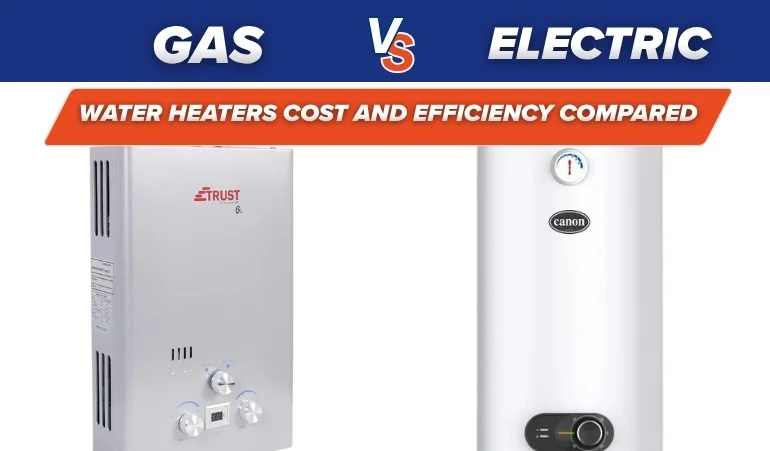
Water heating comprises 18% of winter energy bills in Pennsylvania and New Jersey. This is the second-largest part of utility bills each month. When your water heater fails, replacement becomes an immediate need. Only if you have a clear idea of upfront costs, efficiency ratings, and annual operational charges can you choose the best system for your home or commercial property.
This blog compares initial investments, ongoing utility bills, recovery rates, and 10-year total ownership costs across all three technologies.
The right system should strike a balance among cost, efficiency, features, and long-term value. Here is a brief overview.
|
Feature |
Standard Electric |
Standard Gas |
Hybrid Heat Pump |
|
Average Unit Cost |
$400 – $1,000 |
$600 – $1,500 |
$1,500 – $3,000 |
|
Average Install Cost |
$500 – $1,000 |
$800 – $1,800 |
$1,000 – $2,000 |
|
Annual Running Cost |
$400 – $600 |
$200 – $350 |
$100 – $200 |
|
Expected Lifespan |
12 – 15 years |
8 – 12 years |
10 – 15 years |
|
Fuel Source |
240V Electricity |
Natural Gas or Propane |
240V Electricity |
|
Energy Efficiency |
90% – 95% |
60% – 70% |
300% – 400%+ |
Upfront costs rarely reflect the true cost of ownership. Standard electric water heaters are usually less expensive to buy. But they incur high monthly energy bills, which add up to the total cost every month. Gas water heaters cost more upfront for equipment and installation due to flue venting and fuel lines. But these systems are generally less expensive to operate due to lower gas rates in Pennsylvania and New Jersey. Heat pump models also have higher upfront costs. But federal tax credits and energy incentives usually make their purchases affordable.
Here is a brief comparison of upfront costs with 10-year total ownership.
|
Expense Category |
Standard Electric |
Standard Gas |
Hybrid Heat Pump |
|
Initial Purchase & Install |
$1,200 |
$2,000 |
$3,200 |
|
10-Year Energy Costs |
$5,000 |
$2,750 |
$1,500 |
|
Maintenance & Repairs |
$300 |
$500 |
$400 |
|
Estimated Tax Rebates |
$0 |
$0 |
Up to $2,000 |
|
Estimated 10-Year Total |
$6,500 |
$5,250 |
$3,100 |
The table shows that equipment with higher installation but lower ongoing costs returns its initial investment through reduced recurrent expenses. This usually makes sense when you plan to live in a building for at least 10 years.
Performance depends on how efficiently your system converts the input energy into output. Electric models work efficiently with little energy waste. But they are still expensive to operate due to higher electricity rates in mid-Atlantic regions. Gas models lose significant energy due to exhaust venting. But they are still ahead, as they deliver hot water immediately. Heat pumps have very high efficiency ratings because they utilize existing thermal energy, rather than generating it from scratch.
Here is a brief efficiency overview
|
Performance Metric |
Electric Models |
Gas Models |
Heat Pump Models |
|
Efficiency Rating (UEF) |
0.90 – 0.95 |
0.60 – 0.70 |
3.00 – 4.00+ |
|
Heat Loss |
Low |
High |
Very low |
|
Recovery Rate (GPH @ 90°F Rise) |
18 – 22 GPH |
30 – 45 GPH |
14 – 20 GPH |
|
Environmental Footprint |
Moderate |
High |
Low |
The right water heater for your home or commercial facility should align with your comfort needs, budget, and long-term cost value. Lehigh HVAC recommends that its customers make more confident decisions by aligning priorities and budget with features.
Standard electric heaters are the right fit when:
Choose standard gas heaters for your home or business when:
Installing a hybrid heat pump heater is the ideal choice when:
Contact Lehigh HVAC to help you make the right buying decision and for professional installation.