Contact Info
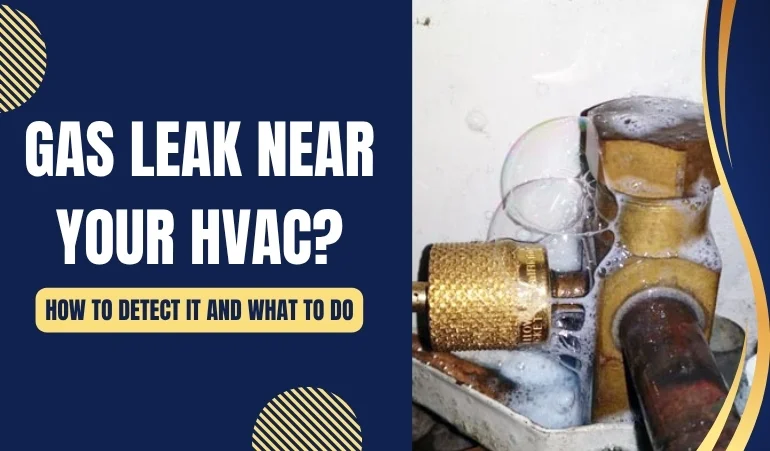
A gas leak from an HVAC system is a critical emergency that requires immediate attention. If it is unaddressed, it can cause serious health concerns and also lead to equipment failure. The concerning part is that most of the New Jersey business owners don’t know how to handle the situation if a gas leakage situation occurs. They call their nearby technicians and end up with heavy property loss until the technician arrives.
In many other scenarios, customers are not sure whether the issue they are encountering is actually due to gas leakage or something else. This is where they are at risk of heavy damage ahead. In this blog, we will guide you on how to detect HVAC gas leakage and what to do before the technician arrives so both your property and staff stay safe.
Detecting an HVAC gas leak can be tricky. But with the right equipment and the right strategy, you can confirm it yourself and take the appropriate measures instantly. Here’s how to detect it.
Natural gas is odorless itself. But HVAC companies add mercaptan to it so it can be smelled and detected immediately. Natural gas smells like a rotten egg or sulfur when used with this mercaptan. If you notice such smells in your commercial place, evacuate the facility immediately and call your local technicians.
Natural gas creates hissing sounds when it escapes. Especially when it escapes through very fine, narrow cracks, such sounds are easily detected. If you hear any sounds from your HVAC system resembling this pattern, there is potential leakage of the natural gas.
Multiple visual signs indicate there is a gas leak. Some of those visual signs are mentioned here.
If you notice some of these signs, you are likely having gas leakage issues.
Using gas leakage detection equipment is the best and safest method to detect such leaks at initial stages. But most of the business facilities lack this equipment. It is better if you purchase them and keep them at your office or business place, so you can easily detect and confirm leakage problems.
The following is some equipment used in these scenarios.
HVAC gas leakage is associated with multiple other signs and symptoms. You have to keep a close eye on those symptoms and understand whether it is a leakage problem just with those associated unusual patterns.
Once you are sure that there is genuinely a gas leakage issue at your commercial facility, every single minute is important. Here are the immediate steps you should take soon after detecting the gas leakage. The steps are recommended by professional technicians of Lehigh HVAC after spending 11 years servicing various HVAC systems.
Gas leaks near your HVAC are extremely dangerous HVAC issues. Detecting it immediately and taking prompt action are required to ensure the safety of your equipment and employees/customers. With an expert who arrives immediately, you are on the safe side. You can call Lehigh HVAC in such emergency scenarios to get professional assistance immediately. Call us at 848-361-4707 for emergency service.