Contact Info
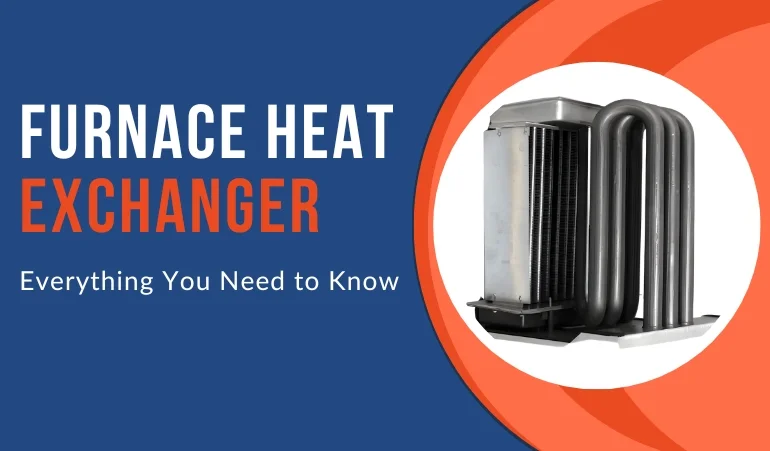
A heat exchanger is one of the most important components of a residential or commercial furnace. Many times when your home furnace fails, the culprit is the heat exchanger. No matter whether the issue is in the blower motor, valves, or filters, it can render the whole heating appliance non-functional. Before calling for residential furnace repairs, you need to locate the actual issue.
This guide is all about educating homeowners about a furnace heat exchanger. You will learn about the structure, function, and working mechanism of this crucial HVAC component. We will also explore the common furnace problems due to the heat exchanger and how to troubleshoot them.
You must have seen a network of coiled metal tubes in your home furnace. Well! That is the heat exchanger. It covers the furnace from the combustion chamber to the blower. The size and the length of the tubes vary greatly depending on the heating capacity of the furnace.
Meta Tubes: This is the primary structure where combustion gases flow.
Fins/Coils: They increase the surface area of the tubes, maximizing the heat transfer.
Shell: It encases the tubes, directing the flow of both the home’s air and the combustion gases for efficient heat exchange.
Combustion Chamber: This is the enclosure where fuel is burned, and the hot gases are generated.
Exhaust System: It removes the cooled, toxic gases from the home safely.
A flame ignites the fuel source in the combustion chamber. It generates heated gases that are transferred to the mess of the tubes. This heat is used to warm the air passing over the heat exchanger. This warm air is then blown towards the ductwork, where it flows and warms the entire home. The whole setup is installed along with the home furnace installation.
A furnace heat exchanger is a vital component of a heating system. It is not only because of the efficiency, but it is also because of the safety. In fact, a heat exchanger is responsible for safely transferring the heat in your home and preventing the mixing of toxic gases with your home air. When it is faulty, the hazardous gases like carbon monoxide (CO) can mix with your breathing air and lead to significant health risks.
Once you are done with the residential heating installation, you need to keep a close eye on the heat exchanger. A number of issues can pop up over time that need to be sorted immediately. Here are some of the common ones mentioned;
Cracks and fractures are seen very often, and they are the most serious heat exchanger problems. Cracks can be due to extensive mechanical damage to the coils. They can also be a result of wear and tear that comes from the continuous expansion (when metal is hot) and contraction ( when metal is cold) of tubes. There are significant safety and health risks associated with a cracked heat exchanger, including carbon monoxide poisoning that can be fatal.
Troubleshooting Tips: The cracked heat exchangers are not fixed by welding or epoxy methods. A replacement is the most suitable option. That’s why it is recommended to call a certified HVAC professional to fix the issue.
Many times, strong chemical odors are noticed from the heat exchanger. Most often, the pungent smells similar to those of formaldehyde and vinegar are felt. They are harsh enough to cause a headache if smelled for some time. This is often due to hazardous gases leaking from the damaged heat exchanger.
Troubleshooting Tips: Find the source of the smells. Try some DIY steps, like filter replacement, in case of ordinary smells. But if the smells are pungent and similar to some chemicals, call your HVAC professionals immediately, as it involves serious problems.
This is often identified as a thick layer of black powder on the heat transfer surfaces. This is due to the inefficient burning of the fuel in the combustion chamber. The primary cause might be an improper fuel-to-air mixture. It leads to various operational inefficiencies, equipment damage, and safety issues.
Troubleshooting Tips: It involves a professional cleaning and diagnosing the primary cause of the soot. After this, a professional will resolve the underlying issue, so there is smooth fuel burning and efficient operation. Hiring a professional technician is recommended.
A number of preventive maintenance steps are required to minimize the risk of home heating repairs and breakdowns. Some of the proven courses of action by the team, Lehigh HVAC, are given here;
A heat exchanger is an integral part of a furnace. It should be kept in good condition for smooth performance. There are several problems that can arise in heat exchangers due to various reasons. For every problem, see your equipment, apply immediate fixes if they seem to work. When a significant issue is involved, call your HVAC professionals immediately.
Lehigh HVAC is the leader in the industry for all kinds of HVAC services. Call us when you need HVAC assistance, and we will serve you immediately. Contact us at 484-961-7044 to discuss your needs.