Contact Info
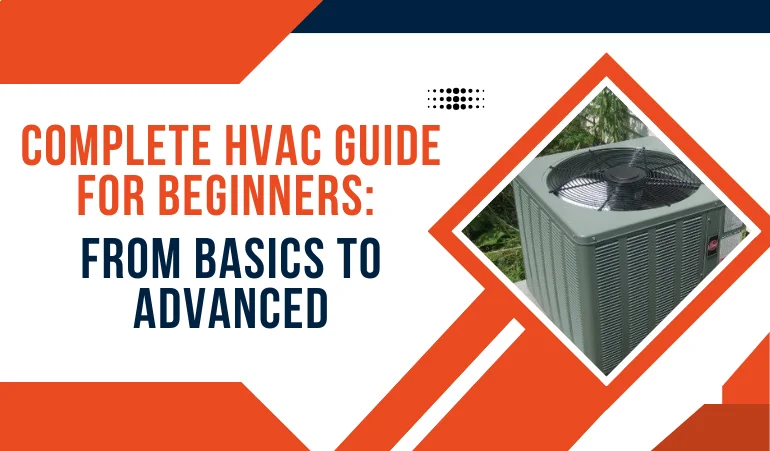
Your warm welcome at Lehgih HVAC. We might have interacted before, but here, we have something special for HVAC customers in Pennsylvania and New Jersey. This blog answers almost every question you might have regarding your HVAC system. From the very basics to advanced, innovative practices, we have covered everything. If it fails to answer any of your specific queries, you can contact us directly at 484-961-7044. We will be pleased to assist you whenever and wherever you need.
HVAC is the most widely used term when it comes to thermal comfort. HVAC stands for Heating, Ventilation, and Air Conditioning. This system performs three basic functions, given below:
A large number of people in Pennsylvania and New Jersey still think that HVAC is limited to heating and cooling only. This is not true, in fact. The ventilation part is very important. A good HVAC system removes moisture, smoke, odors, heat, dust, and airborne bacteria from the space where it is installed. Plus, it maintains free circulation of the air and balances oxygen levels.
The modern HVAC system that we use today was first invented by Willis Carrier in 1902. It was developed to control industrial humidity rather than providing thermal comfort. With continuous evolution, improvements, and modifications, it has taken its current form. The process doesn’t stop here; there is much more to expect. It will definitely help us to ease our leaves through better climate control.
As the name implies, residential HVAC systems are those installed in residential buildings, such as homes, townhouses, and apartments. They are typically compact units, ranging from 1.5–5 ton units, designed for the comfort of homeowners. These systems are relatively simple, have limited heating or cooling capacity, and are easy-to-install. However, you must choose a skilled professional for residential HVAC service to get long-term benefits.
A commercial HVAC system is generally a large unit ranging from 2 to 30+ tons, designed for the comfort of businesses, retail stores, and industrial facilities. These are generally of higher capacity with a complex setup and installation requirements. Similar to the residential ones, you also need a skilled professional for commercial HVAC service to prevent safety and accidental risks.
An HVAC system is a sophisticated collection of multiple tiny and large components that perform in coordination. The signal from one part dictates the other, making a chain of steps that eventually leads to efficient temperature control.
Here are the key components to be mentioned.
Thermostat: It is the central controller where you set the desired temperature range. It dictates that the other components adjust the temperature of the space according to the set range.
Furnace: It is the primary heating unit. It can be powered by oil, gas, or electrical energy to generate heat.
Heat Exchanger: It is a key component within a furnace that distributes the warm air.
Air Conditioner: It is an outdoor unit that releases heat. It comprises a fan, a compressor, and a condenser coil.
Evaporator Coil: It is located in the indoor air handler, and its primary function is to absorb the indoor heat.
Ductwork: It is a network of tubes that distributes air throughout the space.
Refrigerant Lines: It is the line that connects the indoor evaporator coil with the outdoor condenser unit.
Air Filter: It filters the air and improves its quality by removing dust, allergens, and harmful agents.
Now, while we have understood HVAC components and the function of each component, let’s see how they work together.
The primary purpose is to control the indoor temperature, air quality, and humidity. A homeowner or a business owner has to set a normal range of temperature and humidity levels on the thermostat. The thermostat then uses sensors to detect the current temperature and humidity levels in your space. It then starts the cooling or heating process according to need.
The Cooling Process: A fan pulls the warm air from the space. This air then passess throught the refrigerant where its heat is released. This heat travels to the outdoor unit through connected tubes, where a compressor squeezes it and expels the heat outside. As heat is released, the temperature of the space starts decreasing.
The Heating Process: Fuel is consumed to generate heat. This heat is then transferred to a heat exchanger, where it is distributed throughout the space via warm air or warm water. As a result, the temperature of the space starts rising, as external heat is being added.
The Humidity Control: The fan pulls the humid air over the evaporator coils. It first turns into vapors and then into liquid as the warm air comes in contact. This liquid is drained to the outside via a drainable line (PVC pipe).
The Air Quality Control: The air quality is controlled primarily through filtration. The HVAC filters restrict dust particles and contaminants at this level. Some modern HVAC systems include UV-C Lights or Ionizers inside the ductwork for air quality control. Some other systems also possess an ERV (Energy Recovery Ventilator) for this purpose.
While we have now understood the basic framework of an HVAC system and how it works. Let’s now explore its main types. Our focus is to explore only those types that are common in the Northeastern United States, especially Pennsylvania and New Jersey.
Central Split System: It is also known as a central air system. It has separate indoor and outdoor units. The indoor unit contains furnace and evaporator coils. The outdoor unit contains the compressor and condenser.
Hybrid Split System: It is a relatively new, more energy-efficient version, best suited for milder climates. It combines a gas furnace and an electric heat pump in a single unit. The system then switches between these modes depending on the climate conditions.
Ductless Mini-Split System: As the name implies, it doesn’t need ducts for operation. It is a relatively newer and smaller version of an HVAC system, perfect for homes that lack an appropriate ductwork. The indoor and outdoor units are connected by refrigerant and electrical connections, and the air circulates directly, without the need for ducts.
Packaged HVAC System: This type of HVAC system contains both its components in an outdoor unit. It finds its applications primarily in an environment where there is a very limited space available for unit placement.
Geothermal HVAC: They are also known as ground-source or earth-coupled due to their working mechanism. They feature underground pipes to use the constant underground temperature to exchange heat.
You might have encountered HVAC breakdowns or at least might have seen such stressful scenarios. This is not entirely due to the mistake while installing or using inaccurate equipment. Multiple times, the culprit leading to failure is the climate. The climate in your neighbourhood directly decides how hard your HVAC system has to work to maintain comfort. Extremes on any side are not good for your system, whether they lie toward heating or cooling.
Extreme Heat: It forces air conditioners to run longer cycles, leading to overheated compressors and low refrigerant levels.
Extreme Cold: Freezing temperatures and snow can obstruct airflow to the outdoor unit. The results are increased risks of failure and inefficient performance.
Humidity & Moisture: High humidity in summer forces the system to work harder, reduces indoor air quality, and favors mold and mildew growth. In winter, dry air makes heating less effective and reduces performance.
Storms & High Wind: Storms bring debris that can accumulate in components, leading to faster wear and tear. The high wind, on the other hand, makes it harder for air to move through the ducts.
Seasonal Swings: Rapid temperature changes during spring and fall cause excessive cycling. It places an extra burden on both electrical and mechanical parts.
In the above section, we have created a fear. We know that you might be thinking at the moment that harsh weather in your surroundings will push you towards expensive HVAC problems. Don’t worry, we have a solution for this. The solution is, in fact, regular, professional, and complete maintenance. Here is why maintenance is important and what it provides to you:
While most of the HVAC companies recommend annual maintenance only, we have a different opinion. In fact, we care for our customers and don’t want to set the guidelines that can cause problems. Here is what we recommend to customers in New Jersey and Pennsylvania in this regard.
Monthly Maintenance: It involves some basic, DIY steps. First, inspect the air filters and replace them if needed. Second, clean the equipment of dirt, debris, and unwanted particles around the outdoor unit. Third, remove obstructions from all supply and return vents.
Quarterly Maintenance: It can be completed via DIY, but hiring a pro is recommended. It involves steps such as flushing condensate drain lines, cleaning the drain pan, and checking and recalibrating the thermostat.
Semi-Annual Maintenance: The best time is once before summer and once before winter. For summer, clean condenser and evaporator coils, check refrigerant levels, inspect fan motors, and lubricate moving parts. For winter, inspect the heat exchanger for cracks or rust, clean burners, check ignition, and check gas/oil connections.
Annual Maintenance: It is a detailed maintenance and must be completed with extraordinary care. It involves checking and tightening electrical connections, performing a safety check, and optimizing the system’s efficiency and performance.
As the size, specifications, and key features of an HVAC system vary, the prices also differ greatly. As the smart features and the capacity of the unit increase, the price goes up accordingly. Here is a general price breakdown of different HVAC systems.
In the table below, we have compiled a concise list of HVAC price ranges for the Pennsylvania region only. The data is sourced from authentic resources and includes the complete cost (unit price+ installation charges).
|
HVAC Unit Type |
Price Range (Installed) |
|
Central Air Conditioner (Replacements) |
$4,400 – $8,600 |
|
Natural Gas Furnace (Standard Efficiency) |
$3,600 – $6,300 |
|
Natural Gas Furnace (High Efficiency 90%+ AFUE) |
$8,200 – $12,500 |
|
Air-Source Heat Pump (Full System) |
$6,200 – $11,700 |
|
Ductless Mini-Split (Single Zone) |
$2,000 – $5,000 |
|
Ductless Mini-Split (Multi-Zone/Whole Home) |
$6,500 – $14,500 |
|
Oil Furnace (Common in Rural PA) |
$5,000 – $10,000 |
|
ull HVAC Overhaul (Furnace + AC + Minor Ducts) |
$11,500 – $16,000 |
|
Geothermal Heat Pump |
$15,000 – $30,000+ |
In this table, the prices are given for New Jersey. The data is based on the real market scenarios observed in various regions of this state and confirmed by the contractors of Lehgih HVAC.
|
HVAC Unit Type |
Price Range (Installed) |
|
Central Air Conditioner (14-16 SEER2) |
$5,500 – $9,500 |
|
Natural Gas Furnace (80% AFUE - Standard) |
$4,500 – $7,500 |
|
Natural Gas Furnace (96%+ AFUE - High Eff.) |
$7,800 – $11,500 |
|
Electric Furnace (Common in Condos) |
$3,500 – $6,500 |
|
Air-Source Heat Pump (Cold Climate Rated) |
$8,500 – $16,000 |
|
Ductless Mini-Split (Multi-Zone) |
$7,500 – $15,000 |
|
Full HVAC Overhaul (Furnace + AC Combo) |
$12,500 – $19,000 |
|
Boiler Replacement (Common in North NJ) |
$8,000 – $14,000 |
The prices of the HVAC systems are largely decided by their energy efficiency ratings. These ratings are often mentioned on the appliance itself or on its user manual and forecast the performance of a system in real scenarios. The larger the percentage, the more efficient the system is. Here are some of the primary standards in this regard.
SEER2: It measures both AC and heat pump performance over a specific season. Higher ratings around 16-20+ mean more energy efficiency.
SEER: It is an older and outdated standard for cooling efficiency.
AFUE: It measures furnace heating efficiency as a percentage of fuel converted to heat. A 90% AFUE means 90% of fuel becomes heat while 10% escapes.
The prices explained above are not affordable for every customer. Especially for the middle class families, it is a bit difficult to manage the budget. That’s where rebates and incentives come in. Fortunately, the US govt has decided to take off the cost burden from average families. There are multiple rebates and credits offered to customers. Here are some of them summarized:
There are multiple financial aid programs offered in Pennsylvania for HVAC installation and upgrades. The purpose of these programs is to move the customers from “I can’t afford this” situations to “I can’t afford to miss this” scenarios. Here are a few important considerations in this regard.
Inflation Reduction Act - 25C: It offers federal tax credits and rebates to certain high-efficiency HVAC upgrades. It covers 30% of costs up to $2,000 annually. To claim this credit, file IRS Form 5695 or contact Lehigh HVAC for guidance.
PPL Electric Utilities: It offers fantastic rebates for high-efficiency air conditioners, heat pumps, and furnaces.
FirstEnergy (Met-Ed, Penelec, Penn Power, West Penn Power): It offers rebates for ENERGY STAR-qualified equipment.
Lehigh HVAC: It offers GreenSky 0% financing on all HVAC services all across Pennsylvania.
There are also multiple local, state-level, and federal financial aid programs for New Jersey customers. We recommend using every possible option so you get the maximum benefit. For any guidance, feel free to contact us.
Federal Tax Credits: It covers upto 30% of installation costs for heat pumps, AC, furnaces, and more.
NJ Natural Gas (NJNG) - SAVEGREEN: It covers up to $2,000 for single-zone and up to $4,000 for dual-zone qualifying heat pumps (installed by June 30, 2027).
PSE&G: It offers up to $5,000 for high-efficiency HVAC units and $1,500 for integrated control units.
JCP&L: It offers rebates up to $1,500 for qualifying upgrades, including $500 for ductless AC and $400 for heat pumps.
South Jersey Gas (SJG): It offers $900-$1,000 for high-efficiency furnaces and $500-$750 for tankless water heaters.
Lehigh HVAC: It offers GreenSky 0% financing and affordable services for HVAC installations, repairs, maintenance, and more.
When looking for an HVAC system for your commercial or residential facility, you can have a lot of options. Choosing the right one is recommended so you are never left in the heat or cold again. Here is what experts at Lehigh HVAC recommend to make a smart decision.
Manual J Load Calculation: Calculate or get calculated the heating or cooling load of your space. It depends on factors such as square footage, number of rooms, level of comfort needed, etc.
Regulatory Requirements: Understand the regulations and code-compliance standards for new HVAC installations or upgrades in your region. Obtain permits and legal documents from relevant authorities to proceed with seamless HVAC service.
Rebates and Financing: Consider the rebates, tax credits, and financing options offered in your area. Choose your system that is eligible for smart savings.
Choosing the right HVAC professional is as important as choosing the right equipment. It is because only an expert technician can install or repair the unit the right way. A slight negligence by a street technician can lead to unwanted consequences. Here is what we recommend checking:
License and Certification: Verify the technician possesses the recognized certification and has a valid license to work in your area, with the system you have.
Local Knowledge: Confirm whether the technician possesses the right set of knowledge about your region, for example, about temperature, soil, humidity, and seasons.
Code-Compliance: Check whether the technician is familiar with the code-compliance requirements in your area and can help you with the required paperwork and application process.
Ratings and Reviews: Check what his previous customers had an experience with him. You can check his profiles on social media, local directories, and business listings.
The HVAC industry is evolving at an exponential rate. The units today we have are very different from the versions created at the beginning. Nowadays, there are multiple innovations in the industry for efficient thermal comfort, ease of use, and efficiency.
Smart HVAC and AI Integration: Systems are now integrated with AI and machine learning models. They analyze the temperatures, data, and component failures in real time. These insights are then used for better HVAC control and maintenance.
Advanced Heat Pump Technology: Geothermal and high-efficiency heat pumps are now replacing the ordinary ones. They use underground temperatures or ambient air to provide superior comfort at higher efficiency.
Eco-Friendly Refrigerants: Refrigerants like R-32 and R-454B have reduced environmental impact and are becoming more popular these days. It is a smart move toward low-global-warming-potential (GWP).
Improved Indoor Air Quality (IAQ): Innovations like HEPA filtration, UV-C light purification, and bipolar ionization can effectively remove contaminants and improve indoor air quality.
Variable Refrigerant Flow (VRF) and Zoning: VRF systems and advanced zoning now allow customers to control the temperature of different areas in the same building efficiently.
Solar-Powered HVAC: Integrations of photovoltaic panels and thermal storage now allow users to operate their HVAC appliances on renewable energy sources.
Sensor-Enhanced Ventilation: Smart vents and sensors can now monitor CO₂, humidity, and occupancy to optimize the airflow accordingly. It leads to reduced energy consumption.
HVAC systems have transformed the heating, ventilation, and air conditioning in both residential and commercial sectors. These systems can provide both heating and cooling, along with efficient ventilation and humidity control. HVAC systems are available in various sizes, specifications, and features, according to the needs of the customers. Modern high-tech innovations allow customers to have efficient control over their home’s or office’s temperature, even while they are away. If you choose the right HVAC unit, get it installed the right way, and maintain it regularly, you can enjoy the comfort you have dreamed of.
Lehigh HVAC is the leading provider of HVAC services in both Pennsylvania and New Jersey. Contact us at 484-961-7044 when you need HVAC assistance or guidance. We will provide you with immediate, on-site support at a very reasonable fee. Plus, you can pay in installments with GreenSky 0% financing options.