Contact Info
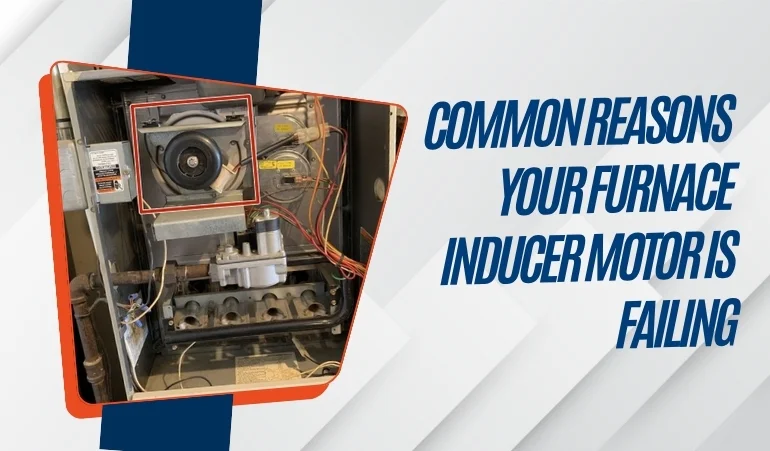
When a furnace fails in Pennsylvania, homeowners usually suspect a broken thermostat, a dirty air filter, or a pilot light issue. Even technicians start with power and airflow checks. But many times the culprit is a small device: the inducer motor. This tiny component sits at the top of the furnace, inside the upper burner compartment, and next to the exhaust vent pipe. Though you might have rarely heard about it, it is as important as other furnace components.
This post explains the introduction, working mechanism, and common reasons behind failure for a furnace inducer motor. It also includes tips to prevent such issues in the future.
A furnace inducer motor is a small internal fan. Unlike other furnace components that work when the heating process starts, the inducer motor runs before the furnace starts. It expels poisonous gases outside and brings in fresh air that is compatible with the ignition process. If this fan doesn’t work, safety switches stop the entire heating process and block the fuel delivery to the ignition chamber.
The causes are diverse. From harsh Pennsylvania winters to poor maintenance, incorrect system size and efficiency, and neglected tune-ups, everything matters. Here are some common causes of a failing furnace inducer motor that we often notice in Pennsylvania.
The inducer motor runs every heating cycle, day and night, and for years. Over time, its bearings wear out and require replacement. Based on our observations in Pennsylvania, a furnace inducer motor usually survives 12 to 15 years. But you shouldn’t wait 15 years. The best deal is to replace it when the furnace approaches 12 years, so you stay ahead of emergency failures.
Furnaces produce moisture as a by-product of condensation, a vital step in the heating process. This moisture converts into water and is carried away outside through the condensate drain line and drain pan. But sometimes, this pathway is blocked either through a clogged drain line or a failed condensate pump. The water now climbs up, reaches the inducer motor compartment, and accelerates corrosion.
During our service visits in Pennsylvania homes, we closely notice signs of corrosion or moisture. If found, we first eliminate the moisture source, then fix the motor problem so your new motor doesn’t fail the same way.
The motor itself is not always faulty. Sometimes, the electrical components cause failure. The motor winding can burn out due to high strain or restricted airflow. If you suspect this issue, confirm it with a multimeter test. Run the system and check the readings. If the multimeter readings are uneven or out of range, replace the motor to restore normal furnace operation.
A loose connection between the control board and the inducer motor can also cause intermittent failures. Loose connections usually result from corrosion, aging, or wear and tear. A single-run inspection rarely catches this problem. That’s why Lehigh HVAC technicians run multiple cycles to actually understand the issue before replacing the motor.
Regular care and maintenance are the key to efficient performance. All the aforementioned problems are either due to negligence or due to aging. If you schedule regular maintenance and replace components on time, you will rarely experience unexpected failures. Follow Lehigh HVAC tips to prevent such issues.
Lehigh HVAC has been fixing furnace issues in Pennsylvania for over 11 years. We deal with almost all major brands, makes, models, and furnace types. With us as your HVAC partner, you get honest pricing, same-day service, and expert workmanship. Contact us at 484-961-7044 for your next service.