Contact Info
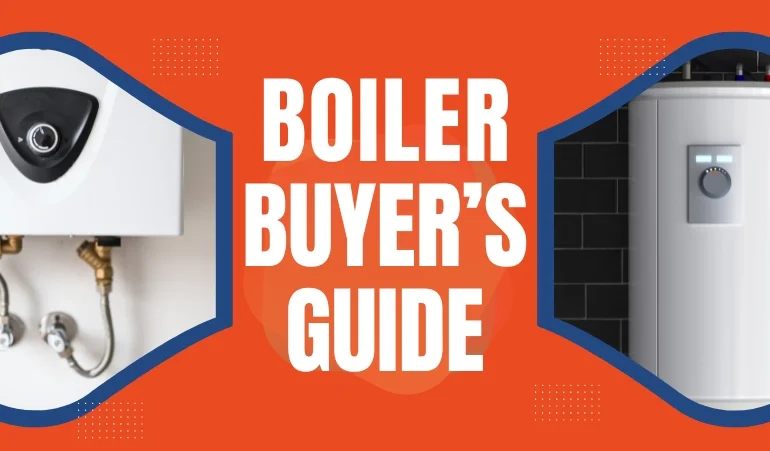
A boiler is one of the most commonly used heating appliances in Pennsylvania, New Jersey, and many other areas of the USA. What makes it a top choice of homeowners and business owners is its consistent comfort, superior indoor air quality, and long lifespan. There are several types of boilers based on fuel type, working mechanism, and construction. Many customers are confused when purchasing a new boiler for their home or business. This concise guide is designed to help you make a smart decision for your investment.
Let’s learn in detail what to consider before buying a new boiler.
Before we specifically study the practical guide of buying a new boiler, let’s first uncover the common types of boilers in various states across the USA. Boilers can be natural gas-fired, oil-fired, biomass-fired, or electric, based on their primary fuel source. Boilers can also be categorized as fire-tube boilers and water-tube boilers based on their construction and design. Combi boilers, system boilers, and conventional boilers are some other types of boilers based on the need for a storage tank and the complexity of structure. Each specific type finds the best application in a specific environment and for a specific climate.
Choosing the right boiler is essential to get reliable comfort all winter long and to reduce future needs for boiler repair and maintenance. A lot of factors affect the performance of a boiler directly or indirectly. Considering all the affecting factors and choosing the appliance carefully can provide you with the maximum ROI of your investment. Let’s discuss a few important factors here;
As discussed earlier, the boilers can be of many types. Choose the right type based on the fuel availability in your area. Additionally, keep in mind the costs of fuel sources so they remain affordable for you. In most areas, natural gas boilers are the preferred choice as natural gas is available in most areas and its cost is also reasonable. Electric boilers have higher efficiency and very low environmental impact, but they are not very common because of higher electricity costs.
The boiler’s size is also a very important factor to be considered. The right size of the boiler is crucial to warm the entire building without significant wastage of energy. The undersized units strive hard to keep the temperature according to thermostat levels. In a very hard climate, they are unable to deliver the right comfort. Oversized units, on the other hand, waste a huge amount of energy in every cycle. They provide more warmth than needed and, therefore, are accompanied by frequent short cycling.
Expert Tip: Calculate the manual J load of your building and choose the size with accurate BTU requirements to provide you with the required comfort.
Energy efficiency is all about how much input energy a boiler converts into output. A standard boiler converts almost 80% of the fuel energy into heat. Some modern and very high-efficiency models may convert approximately 90 to 95% of the fuel energy into warmth. Generally, electric boilers are more popular because of their higher efficiencies, but they are also associated with high costs.
Climate is the primary factor that dictates the choice of a new boiler. It is the climate influence that decides what the BTU requirements should be and what size the system will serve the role better. Extremely cold regions demand robust, very high-efficiency units to produce a consistent heating effect. Milder areas, however, need less powerful units with standard efficiency and fuel consumption needs. Carefully consider the climate variation in your region and decide the boiler unit accordingly.
Before you purchase a specific boiler, ask for the warranties and any additional residential heating services included. There must be included labor warranties, component warranties, and free maintenance for a particular duration. Some companies also provide free installation services and repairs based on the equipment’s size and specifications. Consider all these things very carefully and choose the company that offers maximum benefits with quality.
Pro Tip: Compare the quotes from multiple companies. Understand what each is offering and choose the one that aligns with your budget preference and provides good service.
Although neglected most often, safety considerations are paramount when choosing a new boiler. Prioritizing safety-friendly boilers not only protects lives and property but also ensures the system operates smoothly and efficiently. Modern boilers have smart safety features that automatically shut down the system after detecting even minor hazardous problems, helping you avoid emergency commercial boiler repair situations. Make sure the boiler you are purchasing has all the necessary safety features integrated.
There are several incentives and tax credits for a boiler upgrade in various states across the USA. Even for other efficient systems, such as heat pump replacement, rebates are offered. Their primary purpose is to reduce the cost burden on low-income families. It also promotes the use of environmentally friendly boilers. The Inflation Reduction Act offers up to $3,200 tax credit for certain energy-efficient boiler installations. Similarly, UGI offers up to $1,200 rebates to its customers. Lehigh HVAC offers 0% financing options for both residential and commercial boiler installations. Explore all these offerings and choose the unit that is eligible for the best offers and rebates in your area.
Although this is not essentially part of the boiler buyer’s guide, proper residential boiler installation is very important. In fact, the success of the boilers is largely influenced by the installation techniques. From the correct placement to even the selection of the screws and bolts, everything affects how your equipment will perform. Choose a trusted boiler installation service for your home. You will never be looking for residential boiler repairs more often.
Pro Tip: Check the license, experience, permits, and social reviews of the installers before hiring them for the job. Checking the work portfolio can also be a good way to check their expertise. A good installer will never be reluctant to show these credentials and records.
The choice of a new boiler is influenced by a lot of factors. Some of the most important ones include the size of the unit, fuel availability, energy efficiency, and safety features. Additionally, checking for rebates and tax credits can lower the total cost of boiler installation and servicing.
If you lack detailed information about the heating appliances and need expert assistance, Lehigh HVAC is here for you. We will conduct a site survey and then suggest the best size, specifications, and model of the boiler unit. We will also assist you with new boiler installation and provide complete guidance. For payments, we offer affordable quotes and 0% financing options. Contact us today at 484-961-7044 to schedule a free consultation.