Contact Info
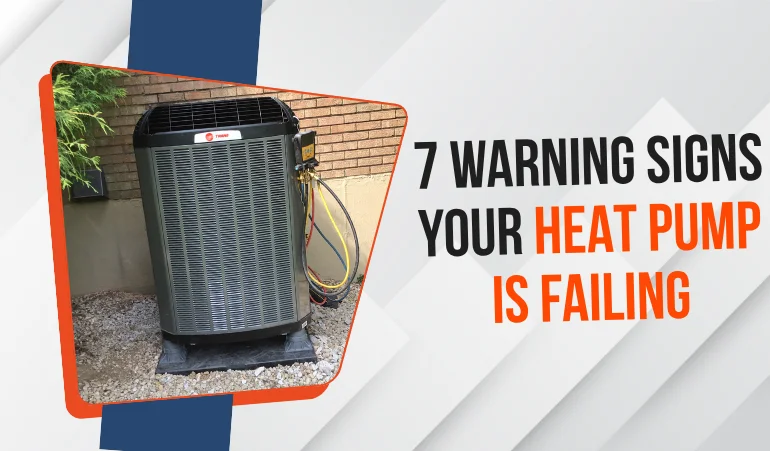
Your heat pump maintains year-round comfort in your home or business place. It handles 80 to 90°F in summer and 30 to 40°F in winter, but you enjoy the same pleasurable lifestyle. It also handles humidity levels up to 70% effectively. Sometimes, this comfortable appliance just gets some faults. These issues are minor at the initial stages and can be corrected via a small heat pump repair. However, if you overlook such issues, you are at risk of facing big trouble at the end.
At Lehigh HVAC, we serve homes and businesses across New Jersey with professional HVAC services. We have noticed that approximately 50% to 70% of major heat pump repairs are due to negligence. The issues could have been otherwise resolved by spending $100 to $200. But when those turn into major complexities, the businesses have to spend as much as $5000 to $10000 for repairs. We noticed another primary issue in this particular region. Most small businesses don't inspect their HVAC appliances regularly. They just set it and forget it until it stops completely. This is where the big trouble arises. We have designed this blog to educate NJ businesses about what specific warning signs their heat pumps display before becoming non-functional. It also includes the steps to take when noticing such signs.
HVAC warning signs are your good friends. They forecast the major issues that could otherwise create great distress. These signs could take any form that is unusual to normal operation. For example, if you hear banging or squealing noises, it might need lubricant for moving parts. Similarly, if there are musty smells, your heat pump is likely harboring fungal species. A complete cleaning can eliminate it.
When you take these signs seriously, you can identify issues quickly after they arise. And when you take prompt actions, you can just get those issues wiped out forever. Lehigh HVAC technicians get clear advice from the company to guide customers about how to handle which specific warning sign. They also offer support to the clients so they clearly know what to do at which specific stage. This is perhaps one of those core reasons Lehigh HVAC has the highest customer satisfaction rate (check our portfolio to learn more about how we handle complex projects). In short, we recommend keeping a close eye on the system and taking prompt action when you notice something abnormal with your comfort partner.
New Jersey's weather is characterized by four seasons, humid summers, freezing winters, and sudden climate fluctuations. Particles in the air, pollen, smoke, and pollutants are also present. Everything fights against your heat pump. Whether you are managing a property in Edison, Hamilton, or Plainfield, your system struggles with these brutal enemies. Many times, it develops some issues due to extra workload or some faulty components, for which it shows warning signs. Below is a quick highlight of the 7 most important of them.
Continuously increasing energy bills are a clear indication that your system is not performing as it is intended. The reasons could be multiple. It could be due to blocked airflow that occurs when air filters are dirty, or there is an obstruction in airflow near the outdoor units. It could also be due to faulty internal components, excessive wear and tear on the equipment, or an aging appliance.
Sometimes, rising bills are due to issues that are outside the unit. For example, there could be a more severe climate outside, and your system is trying to maintain comfort. Many times, customers complain to us about something like this.
"Why does my heat pump incur more bills compared to my neighbor's, while both have almost the same output?
This is logical to ask. And most of the time, it is correlated with the SEER2 efficiency of the system. A heat pump with higher SEER2 ratings consumes less energy and provides a similar level of comfort that a low SEER2 unit provides after consuming high energy. Check the efficiency of your system and make sure it is at least above 15 so it doesn't waste energy.
To bring your energy bills to normal, schedule professional HVAC maintenance. A technician will inspect your system completely, check its components, and bring it back to the ideal condition that you actually want.
The other most important warning sign for a faulty heat pump system is continuous repairs. The repair could be due to any reason. The primary culprit might be internal components, leaked refrigerant, faulty coils, dirty filters, or a failed compressor. If you have to frequently invest in repairs, it means your heat pump is near failure.
The ideal strategy to fix this issue is to schedule a detailed system inspection. A professional team will inspect your system, all its components, and associated parameters with the help of modern tools and equipment. At Lehigh HVAC, we also deploy some evolving technologies and AI-integrated tools for precise inspection. After this inspection, you will get a detailed report of which of your HVAC components are actually creating the trouble. This report will also include the ideal methods for quality repairs.
This is the issue almost every HVAC system owner faces. The sounds can be grinding, rattling, hissing, banging, etc. Most often, the primary culprit is similar for all these causes, and that is the motor components. Loose components, moving parts without lubricant, or wear and tear to some components. Here is a quick overview of common sounds and the underlying causes of each.
Grinding Sounds: Indicates worn motor bearings or a failing fan motor. The motor may seize if not replaced.
Hissing or Bubbling Sounds: Usually indicate a refrigerant leak. It can lead to reduced efficiency and compressor failure.
Banging, Rattling, or Clanking Sounds: Suggests loose parts or external debris. Needs proper cleaning and tightening of the loose parts.
Multiple times, there are unusual smells from the unit. Musty odors are what customers complain about most often. It is due to fungal growth in the system and can only be eliminated after complete cleaning and dehumidification.
It occurs when some rooms have different temperatures than others. It indicates your thermostat is not measuring the right temperature of your home. Or the temperature sensors might be covered with dirt and debris. Placement of the thermostat can also be a culprit behind this. When you notice similar issues in your place, check the thermostat first. Check whether it is placed at the right place where it can measure the home's average temperature. Change its location if it is placed near a direct heat source, sunlight, or any source that can increase or decrease the temperature of that region specifically. Check thermostat batteries and power supply, and also clean the sensors to eliminate this issue.
In New Jersey, the average age of heat pumps is from 10 to 15 years. As your system approaches 10 years, it starts showing symptoms like reduced efficiency, frequent repairs, and unexpected failures. This is directly associated with the increased age, increased wear and tear, and components being unable to manage the high stress.
It involves only two methods to fix. First, you retrofit your system according to up-to-date technology, components, and operational mechanisms. Second, you replace your entire system and get the new one installed that better meets your requirements. If you maintain your system in good condition, schedule professional maintenance on time, and prevent wear and tear, your system might survive for up to 15 years or even longer in some cases. But that depends on exceptional equipment care.
It means your system turns on and off frequently. This often occurs when your system is not of the right size and capacity. If you choose a heat pump of a larger size, it will immediately bring the temperature to the normal range and then shut off. If you choose a smaller system than required, it struggles to achieve the desired comfort level. Both units lead to equipment wear and tear and result in complete system failure when left unaddressed for long periods of time.
The solution lies in replacing your heat pump according to requirements. Conduct a professional manual J load calculation for your house or business place. Then, choose the system that is just perfect to handle that heating and cooling load. It will work efficiently and keep you comfortable all year long.
Ice showing around the outdoor unit tells your system can't absorb the heat effectively. It mostly occurs due to dirty air filters, restricted airflow, or low refrigerant levels. Obstruction in airflow due to other causes might also lead to this issue. The solution lies in turning the system off, replacing air filters, and cleaning the coils. The long-term solution is, however, maintaining the system regularly and getting it tuned up by professionals.
Before failing, a commercial HVAC system shows several warning signs. These signs could be strange noises, musty odors, frequent repairs, short cycling, ice buildup, etc. Whenever you notice these signs, schedule a professional inspection immediately. Delaying the process can worsen the situation, and you might have to pay high repair costs at the end.
For complete HVAC services in New Jersey, contact Lehigh HVAC at 848-361-4707 or book an appointment for further discussion.