How to Reset a Tripped Breaker for Central AC
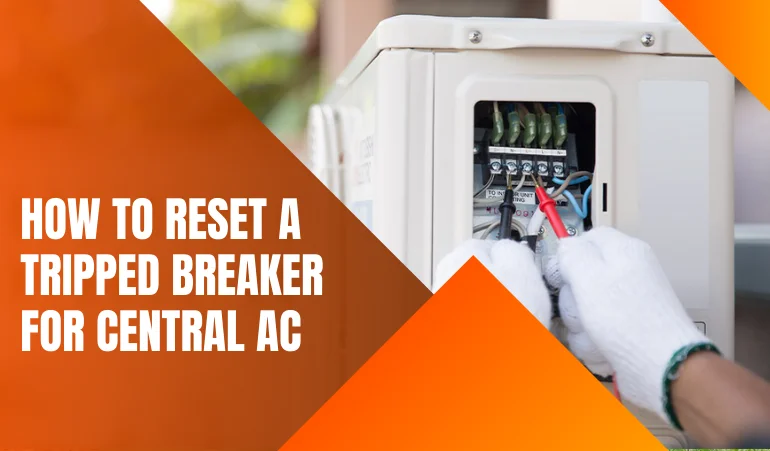
A circuit breaker is designed to cut off the power supply when it detects an overload or unsafe conditions. When an air conditioner suddenly stops working, a circuit breaker is the first thing you should check.
If the tripped breaker is found, you have to reset it. This blog is all about resetting the tripped breaker, a step-by-step guide, when it works, and when you should call a professional.
Why Your Central AC Breaker Trips
Before we specifically explore the practical ways to reset, let’s first discover why it happens. A circuit breaker is the safety check of your HVAC system. When it notices your system is drawing an unusually greater current, or there is a hazard, it shuts your system off by cutting down the power supply.
Here are some common reasons for this issue.
Electrical Overload
Sometimes, your system tries to pull more power than it requires. It happens when some of the components are faulty, or there may be some wiring issues. Regardless of the type of primary cause, your breaker trips when there is an unusual pattern.
Short Circuit
A short circuit is an abnormal electrical path that bypasses the usual pathway. For example, in routine, the current is passed through the capacitor, motor, and contactor. When there is a disturbance in this flow, your breaker detects it and cuts off the electrical supply.
Compressor Startup Surge
It is a brief electrical load that is required to start up the system. It lasts for a second or even less, but it is so strong that it can flicker the lights or trip the breaker. Especially when you turn your system on after 5 to 6 hours of being idle, it leads to a tripped breaker.
Dirty or Overworked Systems
The circuit might be tripping due to some other issues apart from electrical ones. For example, when filters are clogged, coils are blocked, or the refrigerant levels are low, your breaker may trip. It can also happen when your system faces an extra strain or is hotter than usual.
Where the Breaker for Your AC Is Located
Before you attempt a reset, you must identify it. Many homeowners and even property managers are unaware of where the breaker is located.
Here are some common locations where a circuit breaker might be placed:
Main Electrical Panel
Mostly, a circuit breaker is placed in the panel where all the electrical joints are placed. It can be labeled as "AC," "Air Conditioner," or "HVAC." Identify it and then proceed towards resetting. Make sure to follow the safety protocols.
Outdoor AC Disconnect Box
Many times, the circuit breaker is placed in the outdoor unit. You can find it near the condenser with a fuse or switch-style breaker.
Safety Tip: If you can’t figure out which breaker controls your HVAC system, call for professional help. Attempting a reset in uncertainty is never safe.
Step-by-Step Process to Reset a Tripped AC Breaker
Now, while we have covered enough basics, let’s come to the practical guide. The steps presented below are recommended by the certified experts at Lehigh HVAC.
Turn Off the Thermostat
Before you move towards resetting the breaker, first turn the thermostat off. It will keep your system protected from any accidental damage.
Locate the AC Breaker
Identify the box where the breaker is located. It could be in the main electrical panel or the outdoor disconnect box. Make sure the breaker you are interfering with is truly the one that monitors the supply to your HVAC system.
Flip the Breaker Fully Off
Move the breaker to the "OFF" position. It ensures the breaker is now fully reset.
Turn the Breaker Back On
Now, flip the breaker back to "ON." It will restore the power supply to your HVAC system.
Restart the Thermostat.
Turn the thermostat on and set it to the cooling mode. Monitor operations closely and check whether your AC now runs properly.
Safety Reminder: If the breaker trips again immediately, do not attempt multiple resets. Instead, contact a licensed HVAC technician for residential AC repairs or commercial AC repairs, depending on the property.
Common Reasons AC Breakers Keep Tripping
Sometimes, the circuit breaker doesn't maintain a consistent supply and trips again. This indicates an issue with the internal HVAC components. If the same happens in your case, don’t attempt any further fixes.
Here are some common reasons for your breaker tripping again.
- Dirty air filters
- Blocked or dirty condenser
- Low refrigerant levels
- Faulty compressor or motor
- Loose electrical connections
- Overloaded circuit
When to Call an HVAC Professional
In certain cases, resetting the circuit breaker is not safe. It can lead to severe consequences such as internal component failure, fire hazards, or major breakdowns. In those cases, hiring a licensed and certified technician is the best solution. Below are some warning signs that demand a professional technician.
- Burning Smell or Smoke
- Buzzing or Popping Sounds
- Instant Breaker Trip
- Visible Wiring Damage
Final Thoughts
Tripping circuit breakers are one of the most common HVAC issues frequently encountered across New Jersey and Pennsylvania. It can be due to various issues. From dirty air filters to major component failures, the breaker may trip in various situations. Whenever trying a reset, first identify the right breaker, turn it off, then turn it on, and then turn the thermostat on. Make sure you follow all the safety protocols. If the breaker continues to trip, the system may require professional inspection, repair, or even new residential AC installation or commercial AC installation if the equipment is outdated.
For expert HVAC assistance in PA and NJ, call licensed technicians from Lehigh HVAC.